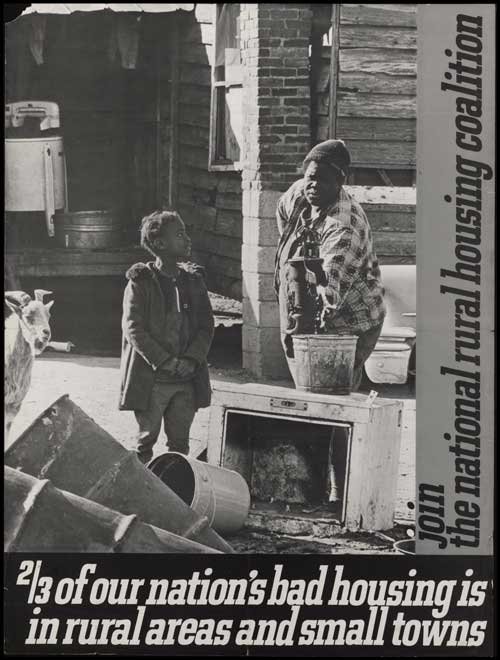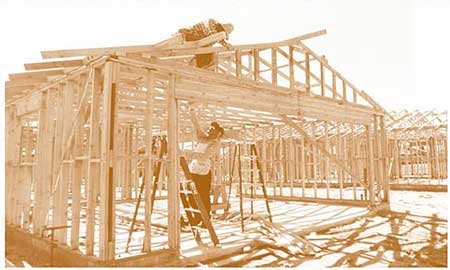
NRHC has long asserted that rural America faces a substantial shortage of decent, affordable housing. Efforts to improve rural housing conditions are hampered by high interest rates. In rural America, the current interest rate environment only exacerbates the problem. Years of declining investment in renovating existing homes and building new ones in our small towns and farming communities have created a pronounced housing deficit. As a result, in some rural communities, economic growth is impeded not by a lack of jobs but by a lack of housing for workers.
Where housing is available, it is often in poor condition. Among the 25 million units in rural and small communities, over 5 percent, or 1.5 million homes, are classified as moderately or severely substandard. Additionally, over 30 percent of the nation’s housing units without hot-and-cold piped water are in rural and small-town communities. On some Native American lands, the lack of basic plumbing exceeds the national average by more than 10 times.
In the coming years, the rental housing picture in rural America will likely worsen as maturing Section 515 mortgages accelerate and federal resources fall far short of what’s needed to preserve these important rental housing resources.
Housing conditions for agricultural workers are also a major concern. According to the most recent National Agricultural Workers Survey, 33% of all farm workers and 45% of migrant farmworkers live in crowded dwellings[1]. As a result, three out of every five farmworker families live below the federal poverty line.
Our nation’s small towns and farming communities face a critical shortage of decent, affordable housing, and the federal response has not been sufficient. Spending on direct loans is less than half the Fiscal Year 2010 level. As a result, the number of single-family direct loans in Fiscal Year 2024 was the lowest since the mid-1950s; USDA has not made direct loans for rental housing construction in over a decade, there is meager support for the preservation of existing rental housing, and only about 200 units of housing are financed annually for migrant and seasonal farmworkers.
In June 2025, the White House Council of Economic Advisers came to the same conclusion. Their report, The Deterioration of Housing Affordability in Rural America, found:
- Rural incomes have not kept up with rising rents. Real rents increased by 31.2 percent between 2000 and 2023, whereas the median real income of rural renting households only rose by 5.5 percent.
- Real house prices have vastly outpaced incomes. Real rural house prices have risen at faster than 6x the pace of homeowner incomes, which is pushing homebuying further out of reach for young families. •
- Rural homeownership rates have declined across nearly all age groups. Rural homeownership rates have declined for working-age Americans. For example, the fall in homeownership rates between 2000 and 2023 for rural households aged 31-35 is 3.2 percentage points and for households aged 36-40 is 3.8 percentage points[2].
[1] Hernandez, Trish, and Susan Gabbard. “Findings from the National Agricultural Workers Survey (NAWS) 2015-2016: A Demographic and Employment Profile of United States Farmworkers – Research Report No. 13.” DOL, 23 Jan. 2019.
[2] The Deterioration of Housing Affordability in Rural America, 12 June 2025.