
Fahe
Fahe is on a mission to eliminate persistent poverty in Appalachia. Fahe’s unique collaborative model connects a Network of local, regional, and national leaders, all working together to uplift the nation’s rural places.
Working with a network of over 50 nonprofits across the Appalachian portion of Kentucky, Tennessee, West Virginia, Virginia, Alabama, and Maryland, Fahe uses its expertise in finance, collaboration, innovation, advocacy, and communication to achieve a more prosperous Appalachian region. With a focus on leadership, housing, education, health and social services, and economic opportunity, Fahe empowers the people and communities of Appalachia with the resources, opportunities, and tools needed to build a better life. Fahe’s strength in numbers creates positive change in Appalachia, one of the poorest and most difficult regions of the country to serve.
In FY 2016, the Fahe Network served 75,000 people and made a direct investment of $73 million in housing and community development. Since Fahe’s inception in 1980, Fahe and members have served more than 375,000 Appalachians with housing and other services, made over $609 million in direct investments, and achieved a total cumulative financial impact of over a billion dollars in the Appalachian region.
Fahe’s collaborative model extends beyond its members to several successful public / private partnerships such as the one with USDA Rural Development. Fahe coordinates a network of 502 Direct packaging partners in 18 states allowing the streamlined delivery of affordable mortgage products to underserved areas. Fahe is also proud to have received $50 million in Community Facilities funds through Uplift America. The funds build real capacity for the region and the organizations that serve persistent and high poverty areas.
 A New Start in Pleasant Ridge
Jeff is a single father of four children. He’s always dreamed of owning a home large enough for his family to live comfortably in a safe neighborhood.
However, Jeff’s family has faced numerous obstacles. Jeff suffered a severe back injury that has resulted in the family living on a fixed income and residing in doublewide trailer that was difficult to heat and cool. To make ends meet, Jeff was forced to move away from the family-owned property and into a low-income rental home.
Luckily for Jeff, the home was owned and maintained by Clinch-Powell RC&D, a Fahe Member based in Rutledge, TN. Jeff developed a relationship with the staff and soon accepted a position as an Appalachia CARES / AmeriCorps member. While working there, he learned about the USDA 502 Direct program and applied through Fahe’s mortgage division, JustChoice Lending.
Now Jeff’s family lives in Pleasant Ridge, a mixed-income community built by Clinch-Powell. “The Pleasant Ridge community is perfect,” said Jeff. “With my ties to Clinch-Powell I have managed to meet all of the residents who live here. There are other kids in the area and this will be the first time my children have a chance to be part of a community. And on top of that, it’s cheaper to own the house than rent.”
Motivation Education & Training, Inc.
Motivation Education & Training, Inc.’s (MET’s) mission is to empower and inspire rural populations through motivation, education, and training. Its vision is to provide people in rural areas the necessary support and resources to significantly improve their lives. MET’s housing work demonstrates both.
MET’s housing rehabilitation work, as illustrated in the story below, is geared toward hard-working, but very low income farmworkers whose meager earnings do not sustain livable housing situations. Farmworkers often build their own homes in colonias (unincorporated areas often without basic services) with inferior materials and without skilled labor. Homes often lack bathrooms, kitchens, running water or hot water, insulation, roofs that do not leak, safe electricity, and easy egress in case of fire. In other words, homes are very unsafe. Many children reside in this substandard housing. MET’s housing programs provide construction services to make the homes safe and comfortable with basic services.
MET completes 25 to 40 rehabs each year with a variety of funding sources for housing rehabilitations, including Department of Agriculture (USDA) rural housing programs (Sections 504, 502, 306C, HPG), the Department of Labor (DOL) National Farmworker Jobs Program (NFJP), Department of Housing and Urban Development (HUD) programs, the state’s Housing Trust Fund, and local foundation funds. The DOL’s NFJP Housing Assistance grants provide core funding, allowing MET to attract other funds. MET is fortunate to see lives transformed when housing becomes livable – owners are able to turn their sights toward employment, education, savings, and other important areas. When combined with employment and training, families are able to increase earnings as well and continue to improve and expand their homes to accommodate their families.
 Loma Linda Colonias
The Loma Linda colonias are located outside of Eagle Pass Maverick County, TX. In 2016, MET worked with a farmworker family of four (including two children) to rehabilitate their home. The couple migrates out of state to work, as they have for the past 20 years, and earn less than $15,000 each year. Last year they earned $11,000 from farmwork in Minnesota and $3,500 working in local fields.
Though home to four people, the family’s house was unlivable. Typical of self-built homes in the South Texas colonias, the home was unfinished with inferior materials and workmanship. It had a dirt floor, no working bathroom or kitchen, and daylight was visible through the walls. Electricity was unsafe, running off a single breaker and extension cords. The roof leaked. The home was a fire threat. It had only one partially-framed bedroom.
The rebuild cost $17,000, mostly for materials. Labor was performed by farmworker construction trainees enrolled in Southwest Texas Junior College through MET’s employment and training program. Funds typically used by MET for this type of rehabilitation are DOL-NFJP, USDA’s Section 306C, HUD, state funds, and local foundations.
Rural LISC
Rural LISC believes in rural America. Committed to providing support for rural communities, Rural LISC strongly believes that nonprofit community organizations play an essential role in making rural communities good places to live, work, do business, and raise children. It is dedicated to building the capacity of these organizations and increasing their production by generating resources and investing in their work.
Rural LISC partners with 76 community based organizations working to transform rural communities in 44 states. Since 1995, it has demonstrated the value of investing in and through resident-led, rural community development corporations (CDCs) by building capacity and making the resource and policy environment more supportive of their organizations and work.
Rural LISC provides technical assistance, capacity building and predevelopment grants, low-cost loans, and access to investor equity and bridge loans. Its Partner CDCs are part of LISC’s Building Sustainable Communities strategy, which includes five key components: economic development, building family wealth, education, housing, health and education.
Rural LISC Partner CDCs are 501(c)(3) organizations charged with serving low-income families and communities as an integral part of their missions. These CDCs utilize a variety of tools in addition to Rural LISC’s resources, including Low Income Housing Tax Credits (LIHTCs), New Markets Tax Credits (NMTCs), and U. S. Department of Agriculture (USDA) Community Facilities, Economic Development, and Rural Housing programs, such as Section 523 Mutual Self Help Housing, Housing Preservation Grants, Section 502 Direct Loans, Section 514/516 Farm Labor Housing Loans and Grants, and Section 515 Rural Rental Housing Loans.
 Ms. Gretchen Jackson
Ms. Gretchen Jackson, a native of Tuskegee in Macon County, Alabama, had been a resident of an affordable housing complex in Tuskegee since 2004. The complex is a USDA Section 515 Rural Rental Housing facility managed by longtime Rural LISC Partner CDC South East Alabama Self-Help Association, Inc. (SEASHA), a community based organization serving 12 rural counties in central and southeastern Alabama, including some of the poorest in the state.
Since 1995, Rural LISC has provided SEASHA with $24.4 million to support their development of thriving and sustainable communities throughout their service area – addressing persistent problems of low homeownership rates, high unemployment, a declining business base, a lack of adequate medical care, educational deficits and problems of abandoned and severely distressed homes.
With encouragement from SEASHA staff, Ms. Jackson decided to attend SEASHA’s housing counseling training and cleared her credit. In 2015, Ms. Jackson moved into her new home through the USDA Rural 502 Housing Program. She said, “I am so very proud to have something that I own.” Employed as an optical assistant for the past 15 years, Ms. Jackson said she is looking forward to her daughter’s graduation from high school this year and attending college in the fall.
Rural LISC is a member organization of the National Rural Housing Coalition. For more information about Rural LISC and the work that they do, please contact Executive Director Suzanne Anarde (sanarde@lisc.org).
Pathfinder Services, Inc.
Pathfinder Services, Inc.’s mission is “To strengthen communities primarily by enabling people facing physical, developmental or economic challenges to achieve independence, inclusion, and stability.”
In the year that ended June 30, 2016, Pathfinder Services served over 4,500 people, 15 percent of whom have an intellectual or developmental disability. Pathfinder Services’ group home and supported housing programs enabled 187 adults to live in safe, affordable housing with staff supervision levels as needed. Pathfinder Services’ housing for individuals with disabilities meets the strict Medicaid requirements that most market rentals do not. Pathfinder Services’ Transitional Housing program supports six households with children who would otherwise be homeless. They operate a unique rent-to-own program where families rent their future home and participate in mandatory financial fitness and home buyer education to prepare them to purchase the home within one year. Owner Occupied Rehabilitation enables seniors and those with physical disabilities to live in their family homes for as long as possible because of the accessibility rehabilitation done on their homes.
Pathfinder Services’ HomeOwnership Center is the largest packager of the 502 Direct mortgage in the nation. Each year they assist approximately 90 buyers to purchase a home with 502 Direct financing. In FY 2016, they helped 101 buyers purchase a home with USDA mortgage financing. These mortgages can be the only option that participating rural families can affordable. If there were no USDA Rural Housing mortgages, most of Pathfinder Services’ customers could not afford the down payment and PMI required of other mortgage products. That would mean fewer rural homebuyers and less community stability.
 Tosha
Tosha
Huntington, Indiana is a small, rural city with 17,166 residents. It is losing population at a slow but steady rate as younger people move to larger cities. The city’s median household income is $39,000 compared to the state’s $50,532. Approximately 33 percent of the housing units are rentals with a median rent of $665 per month.
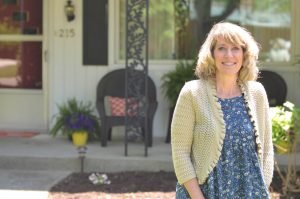
Tosha was one of those renters. Because Tosha wanted to ensure that her teenaged children could live in a safe and comfortable home, she paid $725 for her monthly rent. She has a good income and could afford her rent, but had a dream to be a homeowner. However, her high rent payments and other expenses prevented her from saving for the down payment needed to purchase.
In 2014, Tosha contacted Pathfinder HomeOwnership Center to see if she could afford to finally stop renting and purchase a home. She found the perfect home but Pathfinder staff encouraged her to wait a few months before buying to put her in a better financial position. She was able to buy her home in the summer of 2015 with a USDA Direct mortgage payment of $530 per month – a significant savings from renting. Her 502 Direct mortgage not only enables her to save money each month, but it gives her the stability of homeownership that she always wanted for herself and her children.

Community Housing Improvement Program
Since 1973, Community Housing Improvement Program (CHIP) has provided healthy, sustainable and affordable housing and services to qualified residents in the North Valley. CHIP is a private, non-profit 501(c)(3) corporation serving Butte, Glenn, Tehama, Plumas, Shasta, Sutter and Yuba counties in California.
“Helping People Help Themselves” is CHIP’s mission. CHIP assists low-income and rural disadvantaged residents, seniors and others who lack financial resources or knowledge to improve or provide adequately for their housing. CHIP works with families to assist in the construction of mutual self-help (sweat equity) housing and affordable multifamily apartment housing, manages rental properties that they build as well as properties owned by others, provide education and services to community residents, and build and enhance the communities that we work in.
CHIP has built more than 2,500 housing units in their seven-county service area and is acknowledged as an innovator and leader in rural housing issues. CHIP is guided by a 12-member volunteer Board of Directors, and has an annual operating budget of $2 million, which is funded primarily by state, federal and local grants and contracts. CHIP has 62 employees, many of whom have a long tenure with the organization.
Orland, California
CHIP celebrated the groundbreaking of 17 new homes in Orland during June’s Homeownership Month. Magdalena Guzman has been a resident at CHIP’s East of Eaton Apartments in the City of Orland for several years. Like her, many of CHIP’s rental housing tenants go on to become self-help builders and homeowners.
Under CHIP’s Mutual Self-Help program, families build their homes in groups of around six under the supervision of CHIP’s construction staff. Each family dedicates at least 30 hours per week in labor toward building their new homes and help each other during the process, which takes about nine months. Benefits include no down payment, affordable monthly payments and low fixed interest rates. USDA Rural Development provides funding assistance for these programs. To be eligible, families must earn at or below 80 percent median income for the area, have decent credit, and earn enough income to make monthly payments on the loan.
Both CHIP and the City of Orland previously worked together to provide a playground for this subdivision to help give it more of a community feel. These new self-help builders will soon be able to enjoy the park with their children.
“Our dream has come true,” says Mario Chandrakumar, another Self-Help builder. This is an American Dream, a lifetime dream.”
 A New Start: Self-Help Housing Corporation of Hawaii
The Self-Help Housing Corporation of Hawaii (SHHCH), a private, non-profit housing corporation, was founded 32 years ago to help improve the living conditions of low income families who are shut out of the conventional home ownership market in Hawaii.
Since its inception SHHCH has assisted 656 low income families on Oahu, Kauai, Maui, and Molokai to build their own houses through the Mutual Self-Help Housing Program. Additionally, SHHCH completed 12 contractor built houses in a national historic preservation rehab project through a Rural Home Loan Partnership Program in an old plantation village. For the past 8 years SHHCH has trained YouthBuild participants in its self-help projects in partnership with the City and County of Honolulu.
SHHCH provides technical assistance including: acquisition and development of suitable land sites, providing financial counseling; providing loan counseling and packaging; teaching home ownership courses; attaining low interest interim and permanent financing; drafting house plans, site plans, and specifications; attaining necessary state and local approvals; and providing on-the-job construction training.
Under its Mutual Self-Help Housing Program low income families provide sweat equity to cut the costs of building their houses in half. By building their own houses Mutual Self-Help Housing Program participants gain a tremendous sense of self-esteem, and learn invaluable skills in home maintenance, leadership, and team building. Communities benefit from the establishment of stable neighborhoods with well-maintained homes, an increase in property values, and a broadening of the local tax base.
Ma’ili, Hawaii
Ma’ili, on the Waianae Coast, is a small, rural community of predominantly Hawaiian/part-Hawaiian and Pacific Islander residents, many of whom live in substandard or overcrowded housing. Ove the last few decades many local residents faced displacement and homelessness as investors speculated on the coastal properties. In 2007 SHHCH purchased 9.5 acres in Ma’ili and developed a 72 lot subdivision in partnership with the State of Hawaii’s Housing Finance and Development Corporation, the City and County of Honolulu, and the U. S. Department of Agriculture.
Under its Mutual Self-Help Housing Program, 43 low income families have completed their houses, and the other 29 families are completing the construction. Forty percent of the families have incomes below 50 percent of the area median income and several of them were qualified with the assistance of Section 8 Homeownership vouchers. Each participant contributed 85 percent of the labor to complete their houses with the “sweat equity worth more than $100,000. The U.S. Department of Agriculture provided Section 502 Direct financing for 64 of the low income families, and 8 families attained conventional financing from Bank of Hawaii. The development created affordable quality housing for 300 residents, and more than 200 jobs.
Self-Help Housing Corporation of Hawaii is a member of the National Rural Housing Coalition. For more information of Self-Help Housing Corporation of Hawaii and the work that that do, please contact: Selfhelphawaii@gmail.com.
 Changing Lives: Self-Help Homes
The mission of Self-Help Homes is to provide affordable housing opportunities to individuals and families living in Utah. Currently, we serve those living in Utah, Wasatch and Washington Counties that earn less than 80% of the area median income defined as low and very low-income. With over 40% of our county qualifying as low income, many individuals and families have little access to or possibility to own a home and/or have an affordable place to rent. Those who are: living on a fixed income, disabled, unemployed, under employed, elderly, have large families with young children, working families, veterans, young families, single parent families, families with special needs and/or medical conditions are those that typically are in need affordable housing and are paying more than 30% of their income toward housing.
Our organization provides affordable homeownership opportunities through the Mutual Self-Help Housing program and home rehabilitation. We also provide rental opportunities through the development of Low-income Housing Tax Credit program projects. Much of our project funding comes through USDA-Rural Development who provides the construction and permanent financing for home construction as well as grant funding to our organization to cover administrative costs. HUD funding through the SHOP, HOME and CDBG programs are loans and grants that also help to purchase and develop affordable land for affordable housing projects.
Over the last 13 months Self-Help Homes has helped over 199 people build their own homes through the development of 40 affordable houses built under the Self-Help program. Over $8,000,000 in funding has been secured to develop land and single family homes for low-income families. This year, SHH will have started and/or completed a total of 450 units of single family homes since our inception in 1998.
It is only through USDA Rural Developments programs that have helped us develop this high number of homes to help hundreds of hard working low-income families.
 One example of the impact that Self-Help Homes has on the community comes from Toquerville, Utah. Maried in February 2011, Mark and Danielle Clyde have what they call a Yours, Mine and Ours family. As blended families go, they say it went better than expected. From the moment they met each other, the family has been best friends and each other’s biggest supporters, though there is never a dull moment at home. Mark works full time at a manufacturing plant and Danielle works part time at a local grocery store.
Looking to purchase a home since 2014, their family struggled to find one they could afford and big enough for the family. They were starting to feel like maybe it was not supposed to happen. Then in January 2016, they read a news article titled, “Homeowners Needed…Sweat Equity Required.” Danielle was so excited she immediately called Mark. This was an answer to a prayer. However, doubts set in as to whether or not they would qualify. Both had gone through financial hardships years prior and figured they might have ruined their credit enough that they could not qualify. After a final prayer, they decided to try. The next day they filled out an application with Self-Help Homes. They heard back a few days later that things looked good and proceeded with the next step.
One year later, they are pouring the foundation for their future home.
Self-Help Homes is a member of the National Rural Housing Coalition. For more information of Self-Help Homes and the work that that do, please visit their website: https://www.selfhelphomes.org/.
Coachella Valley Housing Coalition
Desert Garden Apartments, Coachella Valley, California
 Located in Indio, California about one hundred miles east of Los Angeles, the Coachella Valley Housing Coalition (CVHC) is an award-winning non-profit housing development corporation dedicated to helping low and very-low income families improve their living conditions through advocacy, research, construction, and operation of housing and community development projects.
In the Coachella Valley, agriculture and farm labor fuel the local economy and incomes are low: in 2000, the cities of Coachella and Mecca in the eastern Valley had a median family income of just $27,000. After farm labor, most of the remaining residents are minimum wage employees in service industries such as landscape and tourism. In 1992, the Coachella Valley Housing Coalition broke ground on the Desert Garden Apartment complex, which was ready for occupancy in 1998.
Desert Garden Apartments consists of 88 units of affordable multi-family housing – one, two, three and four bedrooms apartments – on 8.8 acres of land. Thirty-six units of the project serve retired farmworkers and 52 units are designated for farmworker families who work in the rural areas of Coachella, Mecca and Thermal.
On-site amenities include a community building; a courtyard with a covered patio; community gardens where tenants can grow their own vegetables, fruit and flowers; recreation areas for basketball and soccer; a separate childcare center; an after-school kids club; a computer training lab; and courses in English as a Second Language.
The complex, while for both families and retired farmworkers, had the older generation in mind when it created a landscaped hill that actually forms two complexes within one development wherein seniors have some separation from larger families. There are also classes just for seniors such as art lessons, cake decorating and candle making.
Financing was obtained for Desert Gardens Apartments from various federal, state and local sources. USDA’s Rural Development 514 and 516, the State of California Family Housing Demonstration program, and the Riverside County Economic Development Agency were all utilized to make Desert Gardens a reality.
To date, CVHC, in Riverside and Imperial Counties in Southern California, has built 23 multi-family developments (totaling 1,513 units), including two migrant farmworker facilities and two special-needs complexes. Eight apartment complexes provide family housing for farmworkers, funded by the USDA Farmers Home Administration. CVHC has completed 13 tax credit financed rental complexes (755 units). CVHC has also built over 1,000 single-family homes for low and very low income families through its mutual Self-Help program.
For more information about Coachella Valley Housing Coalition, please call (760) 347-3157 or visit www.cvhc.org.
Florida Non-Profit Housing, Inc.
Fellsmere County Enrichment Program, Wauchula, Florida
 Fellsmere Community Enrichment Program (FCEP) is the owner of Whispering Pines Apartments, a farm worker rental development in Fellsmere, Indian River County, Florida – home of world famous Indian River Citrus. In addition to 70 rental units, there is a resident manager’s apartment, maintenance room, laundry room, spacious childcare center and a community room. A variety of services are available to tenants by local partners that include:
- Redland Christian Migrant Association (RCMA) manages the day care center.
- Fellsmere Medical Center provides health services.
- Harbor Federal Savings Bank offers Money Management Training.
- Indian River Community College holds ESL classes.
Whispering Pines was completed in 2005 with a total development cost of $8,500,000. FCEP received $6 million in HUD HOME funds through the Florida Housing Finance Corporation and $2.5 million in USDA Rural Development 514/516 funds. These loan and grant applications were prepared with assistance from Florida Non-Profit Housing (FNPH), located in Sebring, Florida. FNPH is funded by the U.S. Department of Labor to provide technical assistance to organizations wishing to develop housing for farm workers
Florida Non-Profit Housing, Inc. provides technical assistance and training for the Section 523 Mutual Self-Help Housing Program and in the development of rental housing for farmworkers. The organization assists housing providers who serve low and very low income rural residents in the following service areas: Alabama, Delaware, Florida, Georgia, Maryland, Mississippi, North Carolina, South Carolina, Tennessee, Virginia, Puerto Rico and the Virgin Islands.
For more information on Florida Non-Profit Housing, Inc., please visit www.fnph.org.
Frontier Housing
Morehead, Kentucky
 The story of Frontier Housing began in 1974, when a few committed volunteers supported by area churches got together to try to provide solutions for the tremendous numbers of families who were living in unsafe, overcrowded, and unaffordable conditions. With very few funds, but lots of hard work, determination, and a vision, they began doing repair work for homeowners in and around Rowan County, KY. There was success in their vision. Great success. This success grew their original idea from a small group of volunteers to a thriving organization of highly motivated individuals. From those humble beginnings, Frontier has grown to become the largest provider of affordable homeownership opportunities in northeastern KY and one of the largest home builders in our area. In total, we have assisted over 1000 families, and now serve about 250 families each year with homebuyer education. In addition to homebuyer education, we offer affordable home mortgage loans, subdivision development and a range of new home choices including, site-built, modular, and quality manufactured homes. Our promise is a quality home and a fair loan.
A recent success story is that of the Rowe family. The Rowe’s were living in a single-wide, rundown trailer with no running water and their only source of electricity was through an extension cord. Imagine wanting so much to provide for your child only to be blocked by circumstances. Their daughter, Leann, would soon be three years old. The couple felt compelled to seek help when they thought of how life could be different for their daughter.
The Rowe’s had been denied time after time for a loan to purchase a new home. But the Rowe’s were determined not to accept their current situation as their future and that of their daughter. They continued searching until someone finally referred them to the USDA Rural Development office in West Liberty. It was through this organization that the Rowe’s discovered Frontier Housing.
Both organizations immediately recognized that the Rowe’s needed a better place to live and they needed it now. So USDA and Frontier combined their resources and created a loan that would provide what the Rowe’s needed, while not sending them into a debt they could not afford. With everything in place, construction began.
Meanwhile, the Rowe’s were still in need of a water source. They could access city water if they ran a pipe about a half mile through several of their neighbors’ fields. Frontier avoided a potentially bad situation by digging a well on the Rowe’s land.
Just four months later the Rowe’s moved into their new home. They had only hoped for a newer trailer. Instead, they now had a house to call their own. One of John’s relatives was so impressed with their new house that she went to Frontier and was also approved for a new home. The Rowe’s advice to anyone who is thinking about pursuing “a nice home with a low, affordable loan” through Frontier Housing is to “go for it.”
What impressed the Rowe’s the most about Frontier Housing was that “they really consider what you want.” The couple chose the style of their house and the colors to go with it. When asked what she liked most about the house, Jennifer smiled shyly and said, “I love the entrance to the kitchen.” In John’s own words: “It’s exactly the way I wanted it. [Frontier] took care of everything.”
The stage is now set for a new generation to carry on that vision of so long ago. Entering our 35th year, the ideas and changes we are implementing represent an exciting new phase in our organization’s activities, as well as a renewed focus on our long-standing goal of helping families become homeowners. In the days and years ahead, Frontier will continue to create opportunities for residents of eastern Kentucky to imagine and achieve the American dream.
For more information about Frontier Housing, please visit www.frontierhousing.org.
Fahe
Single Family Housing, Berea, Kentucky
 Fahe, a regional non-profit based in Berea, Kentucky, was one of the first CDFI’s certified by the US Treasury Department. Fahe’s mission is to lead its network of Appalachian organizations to sustainable growth and measurable impact through collective voice and access to capital that creates housing and promotes community development. As a financial intermediary, Fahe brings together community-based nonprofits and regional partnerships to connect resources with communities in Kentucky, Tennessee, Virginia and West Virginia. Our ultimate goal is to reduce systemic poverty by improving housing conditions of low-income people living in Central Appalachia and bolstering the region’s economic potency.
As a membership-based organization, Fahe is committed to facilitating partnerships among organizations, corporations and individuals. Because each Member has strengths that make them outstanding organizations, Fahe and its Members commit themselves to building on individual strengths to accomplish more together, share core competencies, and develop models that can be replicated. Fahe Members’ intimate knowledge of the local housing needs means projects are developed to meet specific demand and occupied quickly. Our Members participate in a full spectrum of affordable housing activities, from building homeless shelters to developing rental housing, to counseling families.
In Central Appalachia, there is a wealth of social service providers supporting special populations; clients with special needs, the elderly, chronically homeless and people living in economically distressed areas of Appalachia. Unfortunately, these providers, and their clients, typically cannot benefit from housing programs. The lack of local property development and management capacity in rural communities creates an obstacle to using traditional housing programs, as does the program complexity. Because Fahe’s Members offer such varied and extensive services, social service providers that do not typically engage in housing activities are able to better serve their clients by partnering with Fahe.
For example, Fahe financed the Red Bud Housing Project through one of its equity fund using Low-Income Housing Tax Credits. Red Bud was developed by Kentucky River Community Care (KRCC), which provides client-centered care for special need clients including those who are severally mentally ill, battling substance abuse, mentally retarded, or are victims of domestic violence. Many of KRCC’s clients lacked access to decent, safe, and affordable housing. Case managers spent valuable time assisting clients in maintaining their living arrangements or finding affordable living options. The transient nature of their home life negatively impacted their clients’ ability to succeed in treatment. By working with Fahe, KRCC has access to Fahe Members’ expertise to manage the property and affordable financing. Fahe works to reach the hardest to serve families where they need it most. The families benefiting from these efforts are living in rural Appalachia, where the annual area median income is only $15,800, meaning a family earning as little as $13,000 still may not qualify for rental assistance.
In less than two years Fahe has brought over $17 million to the region, leveraging an additional $4 million, to develop 132 units in communities that would not otherwise have been reached. While these accomplishments are impressive, forging new partnerships is more valuable; these outcomes strike the balance of financing, innovative and partnership that defines Fahe.
For more information on Fahe, Inc., please visit www.fahe.org
Kentucky Mountain Housing Development Corp., Inc.
Affordable Single Family Housing, Southeastern Kentucky
Kentucky Mountain Housing Development Corporation, Inc. (KMHDC) is a faith-based, non-profit hou sing and community development organziation whose mission is to provide low income families with quality, safe, and affordable housing. KMHDC was incorporated in 1973 through a cooperation of churches and community-based organzations to provide housing opportunities for low-income, Appalachian families. KMHDC builds new homes, repairs substandard homes, rents affordable apartments, and originates and services low-interest home loans. KMHDC has developed four subdivisions, built five apartments and built or repaired over 1,000 homes for needy families in southeastern Kentucky.
Our service area includes the Appalachian counties of Clay, Jackson, Owsley, Leslie, and Bell. These five counties are primarily rural and have populations ranging from 29,544 (Bell County) to only 4,690 (Owsley County). With an average per capita income of only $15,955 and approximately 30 percent of the population living in povery, each of these counties are distressed and in need of affordable housing solutions.
One of Kentucky Mountain Housing’s responses to the housing crisis was to deveop its own HOME Loan Fund, through which KMHDC offers clients low-interest loans. The interest rate is based on family income and is not subject to market fluctuations like loans from traditional lenders. KMHDC clients typically pay between only 1 and 3 percent interest.
For more information about KMHDC you may contact Executive Director, Donna Harris, at (606) 598-5128 or via email at dharriskmhdc@alltel.net.
Kitsap County Consolidated Housing Authority
Family Self Sufficiency /Housing Counseling Program, Kitsap County, Washington
Donna, a single mom, dreamed o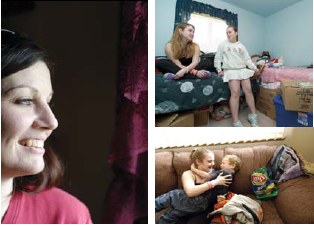 f having a safe place for her kids to play, even a backyard with a garden. But she was bankrupt, over $15,000 in debt, had no credit, and lived in a subsidized apartment. But five years later she has repaired her credit, is working toward her teaching degree, and just bought a new home.
Donna’s success is thanks in part to a partnership between Kitsap County Consolidated Housing Authority (KCCHA, the Authority) and USDA-Rural Development. In 2001, Donna entered KCCHA’s Family Self Sufficiency Program (FSS), which helped her develop a personal five year plan. Following this plan with support from KCCHA, Donna worked her way through a progression of courses that taught her money management and job skills, and then found a family wage job, repaired her credit, became financially independent, and started a savings account.
Nevertheless, despite having taken so many life-changing steps, Donna still did not earn enough to qualify for a conventional home loan. So KCCHA HUD certified Housing Counselor Marvelle Lahmeyer referred Donna to USDA-Rural Development Manager Patrice Varela-Daylo in Port Angeles who helped her get a 1.5 percent interest 38-year loan through the Section 502 program.
KCCHA’s Family Self-Sufficiency Program was created under the Home Ownership and Opportunity for People Everywhere (HOPE) enacted in 1990. Since 1992, FSS families work in partnership with KCCHA to set goals and obtain the skills they need to achieve financial independence. The use of housing as a stabilizing force permits families to invest their energy in other efforts including employment, education, and job training that are necessary for self-sufficiency. The key to success of the program has been the flexibility, compassion, and the one-on-one support from the housing authority’s staff.
Kitsap County Consolidated Housing Authority was created in 1982 and became the first joint city-county housing authority in the state. The Authority’s area of operation includes all of Kitsap County as well as the cities of Bainbridge Island, Port Orchard, and Poulsbo. Its mission is to build strong communities by creating housing and economic opportunities that promote self-sustaining families.
The Authority’s activities primarily involve administration of various federal housing programs, low-rent Public Housing and the Section 8 Housing Assistance Payments Program. The Authority also administers a federally funded Self Help Housing Program of the Rural Housing and Community Development Services (RHCDS), and operates several programs designed to expand affordable housing opportunities.
General funding for KCCHA services come from a number of sources including, but not limited to, bond issues and bank loans (27 percent), rents and tenant charges (18 percent), property sales proceeds (17 percent), USDA-RD loans (10 percent), and HUD Housing Assistance Programs (7 percent).
For more information on opportunities or programs at KCCHA, please visit www.kccha.org.
Motivation Education & Training, Inc.
Amistad Farm Labor Housing, Hereford, Texas
When Motivation Education & Training, Inc.(MET) began working to bring farmworker housing to Hereford 20 years  ago, Hispanics had recently become the majority population in the West Texas agricultural town of 15,000 people (and 300,000 cows). Yet city leaders did not recognize Hispanic leadership and no person of color had ever been elected to public office.
In 1986, MET helped the Amistad Housing Development Corporation organize and apply for funding to build the 30 unit “Amistad” Farm Labor Housing development in Hereford. Initially, neighbors voraciously opposed its development fearing new residents would bring crime and unwelcome activity to the area.
Today, neighbors enjoy their proximity to what is still the “best looking housing” in town, which brought hard-working neighborly families to the community. Twenty new units were added ten years ago. Amistad’s property manager is a recognized community leader, serves on the city council, one of several Hispanics now in public office. City leaders and USDA tout the facility for its design and operations. Farmworker residents enjoy safe, comfortable homes with low rents that allow them to maximize their modest earnings and raise their children in a secure environment.
Including the original 30 units in Hereford, MET assisted in bringing 130 farm labor housing units to Eagle Pass, Texas and Independence, Louisiana. In Texas and Louisiana MET has rehabilitated and/or weatherized 2,851 units owned by very low income farmworker families living in substandard homes. The organization has helped more than15,000 farmworkers with lodging, emergency shelter, homeownership counseling, and development services. Since 1999, similar crisis intervention and services to prevent homelessness have also been offered to rural Minnesotans. And since 1969 MET has helped house 1,000 farmworkers through a program that combines housing with family relocation, training and job placement services in East Texas.
97 percent of the farmworkers enrolled with MET in Texas are Hispanic, while in Louisiana 94 percent are African American. Most of the households face extreme poverty: MET’s Texas clients have an average annual income of $8,560; in Louisiana incomes average only $4,482 – well below the poverty level. Moreover, most participants have not graduated from high school or received a GED, and many have difficulties with English. A recent survey of MET’s participants in the Rio Grande Valley found 30 percent of farmworkers who rent or have no home found a lack of housing to be a barrier to employment.
MET has leveraged $12.3 million from cooperating partners for its housing activities. Primary funding has come from sources including USDA-Rural Development (Housing Preservation Grants and Sections 504, 502, 306, and 514/516), DOL Employment and Training National Farmworker Housing Program, HHS Office of Community Services grants and Community Services Block Grant weatherization funds, HUD’s Emergency Shelter Grant and Rural Housing & Economic Development programs, Rio Grande Valley’s Empowerment Zone Corporation, and Minnesota’s Rural Housing Assistance and Stability Program and Emergency Grant Program.
Motivation Education & Training, Inc. provides employment, training, and housing services to migrant and seasonal farmworkers in Texas, Louisiana, Minnesota, and North Dakota. Since its inception in 1967, MET has strived to improve the economic earnings and self-sufficiency of the nation’s farmworker population.
For more information on MET and its programs, please visit www.metinc.org.
NCALL Research, Inc.
The Rural Delaware Homeownership Initiative, Dover, Delaware
 USDA Rural Development’s Section 502 homeownership loan program provides attractive mortgages to residents of rural America. The terms, rates, and servicing all are designed to better serve rural and remote areas that do not have access to sufficient credit from conventional sources. Despite the program’s potential, NCALL Research, Inc. recognized back in 1985 that very few Delawareans were aware of the program and even fewer felt empowered to go through the intensive application process alone. NCALL envisioned that it could help Delawareans gain access to Section 502 loans Housing Counselors could assist families in becoming mortgage ready and in working through the application process, and so began the Rural Delaware Homeownership Initiative.
The initiative was targeted to central and southern Delaware. Typical of rural areas, the counties had high incidences of substandard housing and poverty. The two primary counties, rural Kent and Sussex Counties, had income levels 30 percent lower than urban New Castle County. In general, NCALL graduates have low and very low incomes –below 80 percent of the county’s median income. Many are single parent households and have incomes averaging about $260,000.
The Housing Counselors helped to get the word out about Section 502 and began providing counseling, training, and packaging services. The education and support provided by NCALL has paid off. In past years, despite the acute need for affordable housing in rural Delaware, some of the USDA funds allocated to the state went unused; today Delaware’s Section 502 allocation is used in its entirety.
The Presbyterian Speer Trust funded NCALL for three years as a test case for whether NCALL had an impact on the problem and solution. Ultimately, the experiment proved NCALL’s projections correct, and the organization witnessed closing after closing for families on new homes. The Delaware State Housing Authority then agreed to fund half the Rural Delaware Homeownership Initiative’s annual budget from housing trust fund appropriations. Other funding comes primarily from annual bank contributions and supplemental fundraising.
The Rural Delaware Homeownership Initiative is still helping families become homeowners in 2009 and closes about thirty Section 502 loans each year. The Initiative leverages about $74 million in federal assistance each year and enables people with the lowest incomes to become homeowners of virtually any federal or private mortgage program. Since 1985, NCALL has closed almost 800 Section 502 homeownership loans and has leveraged more than $65 million in attractive Rural Development mortgages to Delaware. Many of the homes purchased In Delaware under NCALL’s direction have been new construction, adding to the affordable housing stock. A recent University of Delaware study showed an economic impact rate for affordable housing of $7 to $1, meaning NCALL’s impact in rural Delaware can be measured at $455 million. Moreover, since 1989, NCALL has managed a large scale statewide housing counseling program which has helped over, 5,700 households to become homeowners.
NCALL provides a combination of development technical assistance (TA) to nonprofit organizations and counseling services to lower income households. TA services have resulted in development of more than 450 multi-family housing complexes. Section 502 packaging and conventional homeownership counseling have resulted in more than 6,500 closings leveraging half a billion dollars in attractive mortgages.
For more information on NCALL Research, please visit www.ncall.org.
Northwestern Housing Enterprises, Inc.
Historic Elk Park School, Elk Park, North Carolina
Elk Park, North Carolina is a small town (population 480) in rural Avery County (population 16,000). It is situated in the Blue Ridge District of the Appalachian Mountains in the northwestern corner of the state. Because of the regional loss of manufacturing jobs in furniture and textiles, both employment opportunities and the number of persons per household have been on the decline for the past twenty years. Fully 25 percent of the renter households in the area have annual incomes below $10,000. The shortage of affordable housing for seniors and for persons with disabilities has been exacerbated by a recent surge in tourism and in construction of luxury homes for immigrating retirees. One older building site, however, held promise as an adaptive reuse candidate for affordable purposes.
The existing Elk Park School was constructed by the Works Progress Administration between 1935 and 1938 and served as an elementary school for its Appalachian community for over 60 years. The historic stone-faced school building lies on a 5-acre, multi-level site with magnificent views of the surrounding mountains.
Northwestern Housing Enterprises, Inc. (NHE) performed an historic rehabilitation on the old school and built a new structure to the rear of it, providing 40 units of affordable housing for low-income elderly and disabled residents. There are 3 two-bedroom and 37 one-bedroom units, 10 of which are fully accessible for mobility-impaired residents. The development was placed in service in April of 2004.
The original historic school building now contains 16 residential units, along with a manager’s office, social services office, laundry room, library and television room. The existing gymnasium, stage and adjacent baseball field have been refurbished and made available for public use, providing much needed community facilities for the Elk Park residents.
The new three-story building is comprised of 24 units, an elevator, and two laundry rooms. Additional on-site amenities include community gardens, landscaped conversation areas in two courtyards, a gazebo and a walking trail.
The $4.7 million cost of the rehabilitation and new construction has been financed by the syndication of Low Income Housing Tax Credits and Historic Tax Credits, along with below-market rate loans from the Federal Home Loan Bank of Atlanta and the North Carolina Housing Finance Agency. Affordability for tenants is assured through Project-Based Section 8 Vouchers provided through NHE’s affiliate, the Northwestern Regional Housing Authority (NRHA), which also contracts for property management of the apartments. The Historic Elk Park School development received Awards of Merit from the Historic Preservation Foundation of North Carolina and from the National Association of Housing and Redevelopment Officials for excellence in adaptive reuse.
NHE is affiliated in purpose with the public non-profit NRHA and shares its mission to provide housing and economic opportunity free from discrimination for those less fortunate in our mountain communities. Working together with NRHA and with government agencies, private investors and local commercial lenders, NHE has produced more than thirty million dollars worth of new housing opportunity in its ten year history, all of the highest quality and affordable to very low and extremely low income households.
For more information on NHE contact E. G. “Ned” Fowler, Vice President, at (828)264-6683.
Office of Rural and Farmworker Housing
Washington State
The Office of Rural and Farmworker Housing (ORFH) is a private, statewide nonprofit corporation that develops housing for farmworkers and other rural, low-income residents of Washington State. ORFH offers all the necessary services to obtain capital financing and assure the quality of both housing construction and management. ORFH has developed over 1,100 housing units in 23 communities throughout Washington State. These units serve 6,000 farm workers, their dependents, and other rural residents who are working for low wages. Two communities that have recently seen an investment in affordable farmworker housing are Toppenish with a population of 8,946 and East Wenatchee with a population of 5,813. Labor-intensive agriculture is the mainstay of both local economies.
Gonzaga Townhomes – Toppenish, WA
 The Gonzaga Townhomes development was built in 2007 on 3 acres and serves year-round and migrant farmworkers in addition to farmworkers who qualify as homeless. Gonzaga Townhomes consists of six buildings with 25 units plus one manager’s unit and a community room. It includes two- to four-bedroom units in order to serve the community’s need to house year-round farmworkers with larger families. The site is within walking distance of a new elementary school, churches, and commercial services such as a local market, restaurants, and banks located in historic downtown Toppenish.
Gonzaga Townhomes was developed by the ORFH in partnership with the owner/operator, Genesis Housing Services, an affiliate of Catholic Charities Housing Services (CCHS) of Yakima. CCHS has been actively serving the affordable housing needs of the Yakima Valley since 1999. Gonzaga Townhomes financing includes: over $2.6 million from USDA-Rural Development (USDA RD) Section 514 loan and 516 grant; over $777,000 from the Washington State Housing Trust Fund; $200,000 in CDBG funds through the City of Toppenish; and $181,870 from the Federal Home Loan Bank of Seattle.
Vista del Rio – East Wenatchee, WA
The Vista del Rio development consists of 24 one and two bedroom units (128 beds) for migrant farmworkers and their  families and will help to meet the agricultural community’s critical need for seasonal farmworker housing. Vista del Rio is the first development in the area which will implement an innovative new model within the USDA Section 521 Program using Rental Assistance as Operating Assistance. Construction began in 2006, however, was temporarily halted due to “NIMBY” opposition by a neighborhood group. In February 2008 a judge found in favor of the local sponsor, allowing the development to proceed. Construction is now again underway and is anticipated to be completed by Spring 2009.
Vista del Rio is being developed by ORFH in partnership with the owner/operator, Housing Authority of Chelan County and the City of Wenatchee (CCWHA). CCWHA has been actively serving the affordable housing needs of the Chelan County for more than 20 years. Vista del Rio’s financing includes: approximately $3 million in USDA-RD Section 514 loan and 516 grant; $1.4 million from the Washington State Housing Trust Fund; $10,000 through Douglas County 2060 funds; and, over $222,000 from the Washington Community Reinvestment Association. Funders have continued to support this project in spite of significant delays.
For more information on the Office of Rural and Farmworker Housing, visit www.orfh.org.
PathStone (Formerly Rural Opportunities, Inc.)
Section 8 Family Self-Sufficiency Program, Batavia, New York
 Terri Slicker, a single mother of twin 15 year-old girls, is one of hundreds of new homeowners that have benefited from the partnership between USDA Rural Development and PathStone, formerly Rural Opportunities, Inc. (ROI), a multi-state development and services organization based in upstate New York.
Homeless, Terri first came to PathStone seeking housing assistance for herself and her two young daughters. PathStone placed her in its Section 8 Family Self-Sufficiency Program (FS-S) where she received a Section 8 rental assistance voucher. The voucher qualified her family to live in a rental complex that PathStone had developed in Batavia, New York. She studied and trained as a phlebotomist at Genesee County Community College and began working at the local hospital.
Four years after enrolling in the FS-S Program, Terri signed up for PathStone’s First Time Homebuyer Program. She attended mandatory pre-purchase counseling courses covering readiness to buy, credit and budgeting, house shopping, processing and underwriting, and closing. Terri also enrolled in PathStone’s First Home Club, a Federal Home Loan Bank of New York program that matched Terri’s savings 3 to 1.
A year later, after having saved enough money for her down payment and closing costs, Terri purchased a $60,000 three bedroom, one bath colonial home financed through the Rural Home Loan Partnership Program (RHLP). The RHLP is a collaborative effort between USDA Rural Development, private financial institutions, private non-profit organizations, and several national partners including Rural LISC, the Federal Home Loan Bank System and the Federal Housing Finance Board. The RHLP entices private financial institutions to participate in lending to low income families by dividing up the loan costs between Rural Development and commercial banks, placing greater that 50 percent of the costs with Rural Development. The banks, financing less that 50 percent of the cost of the loans, are given a first position on the collateral. Terri used a loan from the Bank of Castile, a local community bank, at 6 percent.
Terri would tell you she would not be a homeowner today were it not for the RHLP and PathStone’s First Time Homebuyer Program. With determination, guidance from PathStone staff and the Rural Home Loan Partnership, Terri Sliker used the Section 8 Program to go from homelessness to homeownership in five years. Today, Terri and her daughters are doing well in their new home and secure in the knowledge that PathStone’s purchase counseling and the staff of both Rural Development and the Bank of Castile are there for her if her family should ever need them.
Begun in 1968, PathStone provides services to farmworkers, low income families and economically depressed communities throughout New York, Pennsylvania, Vermont, New Jersey, Virginia, Ohio, Indiana and Puerto Rico. A chartered member of the NeighborWorks® Network, PathStone successfully operates a wide array of programs funded by federal, state, local, faith-based and private sources.
PathStone is governed by a 28-member Board of Directors comprised of representatives from Program Area Advisory Committees, Migrant Head Start Advisory Councils, Affiliate and Subsidiary Corporations and Collaborative Organizations. Farmworkers and other program participants retain majority control of the Board of Directors as required by PathStone’s Corporate By-Laws.
For more information on PathStone, contact Lee Beaulac, Senior VP for Community and Economic Development, at (585) 340-3366 or visit PathStone’s web site at www.pathstone.org.
Peoples’ Self-Help Housing Corporation
River View Master Planned Neighborhood, Guadalupe, California
River View is new a master planned neighborhood in the City of Guadalupe, a small farm-worker town on California’s 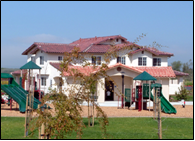 Central Coast. Guadalupe has a population of less than 5,000 – most of them employed in the agricultural sector – and has struggled to provide safe, affordable housing and basic services to its predominantly lower income population.
Peoples’ Self-Help Housing (PSHH), a non-profit housing and community development organization, is the sponsor and developer of River View, which has been lauded for its comprehensive planning, innovative financing, range of housing types offered, and neighborhood amenities and services.
The River View development was completed in early 2005, built on a 25 acre piece of land purchased by PSHH from the City Redevelopment Agency. It includes a new 15 acre city park, a 10,000 square foot Community Center that offers health, education and recreation programs, 50 single family homes for first time homebuyers participating in Peoples’ Self-Help mutual self-help housing program, and 80 town homes for families needing decent, affordable rental housing. As a result of River View, new water and sewer systems, public utilities and paved streets also came to Guadalupe.
For the 130 families residing in the new Guadalupe development, River View represents the first time that do not have to share overcrowded and/or unreasonably high-priced shelter. For the 50 first-time homebuyers, Peoples’ Self-Help’s owner-builder program provided the opportunity to build assets through home ownership. It also developed their construction and home maintenance skills, built self-esteem, and instilled pride of ownership. The 80 families residing in the rental town homes are able to create a savings program as a result of new affordable rents and participate in on-site programs. Perhaps most importantly, all 130 River View families now feel a sense of safety and community.
River View’s Community Center offers a broad range of services coordinated by PSHH, including health education, cultural events and a free academically-based after-school program for youth grades K-12. Adult education classes include homeownership training, financial literacy, and English as a Second Language. River View amenities include a commercial kitchen in the Community Center, several outdoor play grounds, laundry facilities, bike paths and built-in outdoor group barbeque facilities.
PSHHC successfully leveraged $26 million in new investment into the City of Guadalupe. River View financing was provided by a wide range of sources including HUD RHED program; State Department of Housing and Community Development HOME program; USDA Technical Assistance Grant program and Section 502 loans; Rural Community Assistance Corp Agriculture Health and Housing program; California Community Reinvestment Corp; Alliant Capital; HAC – SHOP Program; State of California Joe Serna Jr. Farmworker Grant program; Wells Fargo Bank; and Federal Home Loan Bank of San Francisco.
Peoples’ Self-Help Housing (PSHH) is a national award-winning non-profit organization celebrating 40 years creating affordable housing for cities, counties and community groups in California’s Central Coast region. PSHHC works in 35 communities in San Luis Obispo, Santa Barbara and Ventura counties. PSHH currently has over 5,000 tenants in 1,250 residential units.
The mission of Peoples’ Self-Help Housing is to provide affordable housing and programs leading to self-sufficiency for low-income families, seniors and other special needs groups on California’s Central Coast.
For additional information on Peoples’ Self-Help Housing Corporation, please visit www.pshhc.org.
Rural Community Assistance Partnership
Mechanicsburg-Buffalo Water Commission, Mechanicsburg and Buffalo, Illinois
Mechanicsburg and Buffalo are located east of Springfield, the Illinois state capitol. The Mechanicsburg-Buffalo Water Commission was formed in 1961 to enable the communities and outlying areas to construct a water distribution system to serve 402 households. In 1998, the Commission was cited by Illinois EPA and placed on its “Critical Watch List” for having inadequate source capacity to meet the needs of its customers, as well as violation of rules concerning well proximity (the existing wells were located too close to each other). In addition, the water treatment plant is nearing its capacity and must be upgraded.
A three-phase project was developed to correct the violations. Phase one, which was completed in 2007, included test drilling and well placement and design. Phase two includes making improvements to the water treatment plant and expanding its capacity. Phase three will involve the construction of a new 200,000 gallon water storage tank.
The Commission’s engineer contacted Illinois RCAP in November 2006, for assistance in locating funding for phase two design work. The Commission plans to fund the project through USDA Rural Development and, in order to secure funds, several planning tasks must be completed. RCAP worked to provide the best funding alternatives available. With a median household income of $28,182, it was important that funding be optimized for the entire project, from planning through construction.
One potential funding source was RCAP’s national revolving loan fund. The fund was established for precisely this type of activity -enabling small communities to finance up-front costs in order to access long-term construction funds. The Commission decided to apply to the fund, RCAP assisted in completing the loan application paperwork, and a $100,000 loan was received, which enabled the Commission to contract with its engineering firm for the design of the proposed improvements.
Illinois RCAP then assisted the Commission with mapping the service area and conducting income surveys, which determined that the project was eligible to receive CDBG funds through the Illinois Department of Commerce. (The surveys revealed the area to be 63% low and moderate income.) The Commission then decided to take out a low-interest loan through the Illinois Environmental Protection Agency’s State Revolving Loan Fund (SRF), which allowed them to pay off their loan from RCAP’s national revolving loan fund and complete the improvements/upgrades needed to the water treatment plant. In 2010, the Commission’s engineer plans to submit a CDBG grant to the Illinois Department of Commerce of Economic Opportunity for funds to help complete the capacity expansion by upgrading the water mains connecting to the water tower. Once the Commission receives funding for the water main upgrades, they will prepare for Phase three, which includes the construction of a new 200,000 gallon water storage tank.
For more than 35 years, the RCAP network has been a leader in rural community development. RCAP is a national service delivery network comprised of six regional partners with a national office located in Washington, D.C. Every year, nearly 200 RCAP specialists provide technical assistance, training, and financial resources to more than 2,000 small rural communities throughout the U.S. and its territories.
The RCAP national office engages in applied research, policy development, public education, and advocacy on rural issues, particularly with respect to community infrastructure. In addition, the national office supports the network by obtaining funding, sharing knowledge and best practices, partnering with similar organizations, and promoting dialogue on the changes needed in rural communities to enable them to protect public health and the environment, and create wealth.
For more information on the RCAP network, please visit www.rcap.org.
Self-Help Enterprises
Self Help Housing, San Joaquin Valley, California
 The first organization of its kind in the nation, Self-Help Enterprises (SHE) pioneered the concept of mutual self-help housing construction
in the United States. Working in partnership with USDA Rural Development, SHE’s mutual self-help program has been an effective avenue
to homeownership for thousands of families across the San Joaquin Valley. The primary emphasis of SHE has continuously been the creation of new and sustainable housing and homeownership opportunities. With skilled onsite supervision of SHE construction staff, families participate directly in the construction of their own home.
Since its founding in 1965, SHE has completed construction of over 5,600 new single-family homes, all built under the mutual self-help method of construction, with homeowners providing over 70 percent of the construction labor. SHE locates and/or develops the lots, assists families in obtaining affordable financing, and provides technical resources and construction supervision during construction of these new homes. Joined together in groups of 8 to 12 families, participants contribute 40 hours of time and labor each week during the 10-11 month construction. By pooling their labor to build each others’ homes, these homebuilders build neighborhoods and communities. The cost savings from their labor – or “sweat equity” – provides the down payment on each home.
The participation of SHE in the process is from start to finish. In predevelopment, staff works to market the program, provide homeownership training, develop building groups into effective teams, and assist eligible families in the submission of loan applications. Most often, mortgage loans are secured from the USDA Rural Development Section 502 Direct Loan program. Combining participant labor with an affordable, responsible mortgage is a proven path to sustainable homeownership. Families who participate in the mutual self-help program are responsible borrowers with very low delinquency rates.
In striking contrast to the current mortgage crisis, The SHE/USDA mutual self-help approach takes the responsible, long-term view of homeownership — ignoring the boom and bust cycles, the fads and the quick fixes, focusing instead on providing affordable and sustainable housing opportunities for dedicated and hardworking low-income families.
Solid loans combined with extensive education and support may not be the fastest route to homeownership, but it has proven to be a sustainable one. The mutual self-help housing method, through programs such as USDA Rural Development, continues to provide successful, long-term solutions for low-income homeownership.
For more information about Self Help Enterprises, please visit https://www.selfhelpenterprises.org
Self-Help Housing Corporation of Hawaii
Puhi Self-Help Project, Puhi, Kauai, Hawaii
With the highest housing prices in the country, the Self-Help Housing Corporation of Hawaii (SHHCH) has been successful in assisting 544 lower income families on Oahu, Kauai, Maui, and Molokai to build their own houses through the team self-help housing method.
Even in a poor economy the median sales price for a single family house in Hawaii is over $600,000. The Self-Help Housing Corporation of Hawaii has successfully demonstrated the self-help housing method to be a viable alternative for building affordable, quality homes for lower income families, single parents, native Hawaiians, and others shut out of the conventional market.
On the island of Kauai SHHCH built a 41 lot subdivision in Puhi, a bedroom community outside the capital of Lihue. With SHOP funds and RHLF assistance from the Housing Assistance Council, CDBG/HOME assistance from the County of Kauai, and loans from the Rural Community Assistance Corporation, SHHCH built a 41 lot subdivision as a 201H subdivision attaining waivers on planning and zoning requirements. After providing financial counseling to more than 500 applicants, SHHCH selected three teams of self-help families. Families are building 9 different models of one and two story, three and four bedroom homes. Utilizing the “sweat equity” as the down payment, the house and lots appraise at $470,000 while loans are $226,000 fee simple.
With RD 502 loans as the permanent financing SHHCH is able to qualify 40% of the participants with incomes below 50% of the area median income. Under the RD 502 loans the families will pay mortgage payments with interest subsidies based on their incomes.
SHHCH has completed more than 100 homes on the island of Kauai. In addition to the Puhi Project SHHCH has a 14 lot subdivision in Hana, Maui under development, and a 9 acre subdivision of 77 lots in Mai’ili, Oahu in engineering. In addition to self-help housing, SHHCH has completed 11 contractor built houses, and trains Youth Build participants in various new construction and rehab projects.
For more information contact Claudia Shay, Executive Director, at (808)842-7111 or self@aloha.net.
South County Housing
Gilroy, California
 South County Housing (SCH) is a nonprofit community development corporation operating in the California counties of Santa Clara, Santa Cruz, Monterey and San Benito. Its service area is a mix of urban, suburban and rural communities. A diverse Board and staff carry out its Mission to promote viable neighborhoods that enhance healthy, sustainable communities by collaboratively providing affordable housing and promoting neighborhood services. Since 1979, SCH has built 1360 apartments for families, seniors, farm workers, teachers and disabled people and 1300 single family homes, child care centers, and parks.
Major programs are Affordable Housing Development, Property Management, and Neighborhood Services. South County Housing’s model of combining mixed income housing with on-site services responds at every level to the needs of each community. SCH developments include recreational amenities, childcare facilities and community buildings with computer labs.
Working with strong partners, South County Housing provides tools and training for people to create long-term success in their own neighborhoods through services such as Financial Fitness, Individual Development Accounts, Self-Help or Sweat Equity down payments, Post-Occupancy workshops, After School Programs for youth to improve school achievement and social skills, Leadership Training and support for Neighborhood Associations and Senior Programs.
For more information on South County please call (408) 842-9181 or visit www.scounty.org.
Tierra Del Sol
Desert Sun Apartments, Deming, New Mexico
 The City of Deming, New Mexico is the Luna County seat along the United States and Mexico Border. While the border county is designated by USDA as a Rural Enterprise Zone due to its distressed socio-economic population, it is a dynamic rural agricultural region that attracts a vast population of farmworkers. As in most rural communities, the local rental market in Deming does not adequately serve the very low income population, where a farmworker family of four earns wages of just $7,500 annually.
The Desert Sun Apartments were built in 2001 and expanded in 2005 by Tierra del Sol (TDS) to provide assisted rental housing to migrant and year-round farmworkers and their families. The property is occupied by 96 families and their over 200 children who find stability in the affordable apartments while they work to establish themselves financially. The hope for most is to eventually achieve home ownership through TDS’s self-help housing program.
The Desert Sun Apartments are a garden-style site design with 96 rental units of two, three, and four bedrooms, 1-3/4 bathrooms apartments. The development also offers residents two activity rooms, laundry and an office for the site manager and social services. This design uniquely serves the needs of both the seasonal-occupancy and year-round farmworker households. The site is accessible to schools, a health center, ball parks, a fire station, the Department of Labor and retail services. The flexible financing structure of Desert Sun Apartments offers affordable rents to farmworkers earning income at or below 50 per cent of the area median income.
Tierra del Sol Housing Corporation developed the Desert Sun Apartments in partnership with the nonprofit owner/operator Housing & Economic Rural Opportunity, Inc. (HERO, Inc.). Both organizations have worked closely with USDA Rural Housing Services for 32 years to actively serve the affordable housing needs of New Mexico and West Texas. Resident success is enhanced through supportive social services, which include home buyer education, credit counseling services, the Deming Public Schools Migrant/Seasonal Farm Worker Program, youth employment training, the State Department of Social Services, the State Department of Labor Migrant/Seasonal Farm Worker Advocate program, the local health center and hospital services and others. The property management company has bilingual staff to provide information and translation to monolingual households.
The development was financed through $8 million from private and public loans and grants, and private investors purchasing tax credits, including: $5,000,000 from USDA-RD Section 514 loan; $240,840 HUD HOME loan via New Mexico Mortgage Finance Authority; $2,782,382 from equity provided by private investors purchasing Low Income Housing Tax Credits; and USDA Section 521 Rental Assistance.
Tierra del Sol is a private, statewide nonprofit corporation that has produced 5,000 units of affordable housing and whose work supports multifamily rentals, home ownership, home rehabilitation, neighborhood revitalization, and related community infrastructure development. For 32 years, Tierra del Sol has been the leader in New Mexico in developing housing for farmworkers and other low income rural residents. It provides direct development services to local nonprofit corporations, housing authorities, growers, municipalities and others interested in developing farmworker housing. Tierra del Sol leverages flexible capital financing and assures the quality of both housing construction and management.
For more information on Tierra del Sol, please visit www.tierradelsolhousing.org.
WNC & Associates, Inc.
MacArthur Apartments, Los Banos, California
 The City of Los Banos, population 32, 380, is located in Merced County approximately one hundred miles east of San Jose, California. In recent years Los Banos has experienced a transition to higher priced housing development, reflecting its position as a “bedroom community” for Silicon Valley commuters.
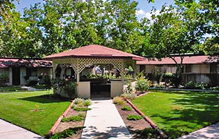
MacArthur Apartments was developed in 1974 on 3.6 acres and is designed to provide housing to elderly people 62 years or older. It consists of 14 buildings with a total of 50 units of one or two bedrooms. The property is situated in a beautifully landscaped setting and has a large community room, a gazebo and community gardens available for use by tenants. The site is within walking distance of community centers, churches, emergency services and commercial services such as supermarkets, restaurants and banks.
MacArthur Apartments was developed by a limited partnership that includes WNC & Associates, Inc. and operates pursuant to Section 515 of the National Housing Act. WNC believes that the quality of life of residents is enhanced through supportive services and therefore sponsors or facilitates a range of services, including a daily free lunch program, senior aerobics exercises, dial-a-ride, bingo and weekly free bread distribution.
As in many rural communities, the local rental market does not serve the elderly low income population well. It is difficult in Los Banos to find rents that are affordable to very low income earners in general. The MacArthur Apartments financing structure, however, allows the owner to rent to households whose annual income is at or below 50 percent of area median income – $19,650 or less for a two person household in Merced County. Tenants pay just 30 percent of their annual adjusted income for rent.
MacArthur Apartments was financed through loans provided by the USDA Rural Development, the payments for which are reduced by a monthly Rural Development interest subsidy. There is also a Housing Assistance Payment contract provided by the Department of Housing and Urban Development, which allows for further subsidy of each unit.
WNC & Associates Inc. is among the top ten largest privately held owner of affordable housing in the United States and has over thirty-eight years of experience in the field. WNC provides investment opportunities and develops properties. WNC is engaged in these activities so that people can have safe, clean and affordable places to live and work.
For more information on WNC & Associates, please visit www.wncinc.com.